

Androgenetic Alopecia
Assessment & Treatment in Dubai
Androgenetic alopecia, also known as pattern hair loss, is associated with gradual changes in hair density and follicular miniaturisation. A detailed assessment can help identify the pattern and stage of hair loss before management options are considered.
What Is Androgenetic Alopecia?
Androgenetic alopecia is a form of pattern hair loss associated with genetic susceptibility and biological influences on the hair follicle.
Over successive hair-growth cycles, susceptible follicles may gradually produce hairs that are finer and shorter than before. This process is commonly referred to as follicular miniaturisation.
The condition can affect both men and women, although the typical pattern of thinning often differs. Men may notice changes around the temples, frontal hairline or crown, while women may notice widening of the central part or a gradual reduction in density across the top of the scalp.
Because progression and presentation vary between individuals, assessment is useful before deciding which management options may be appropriate.
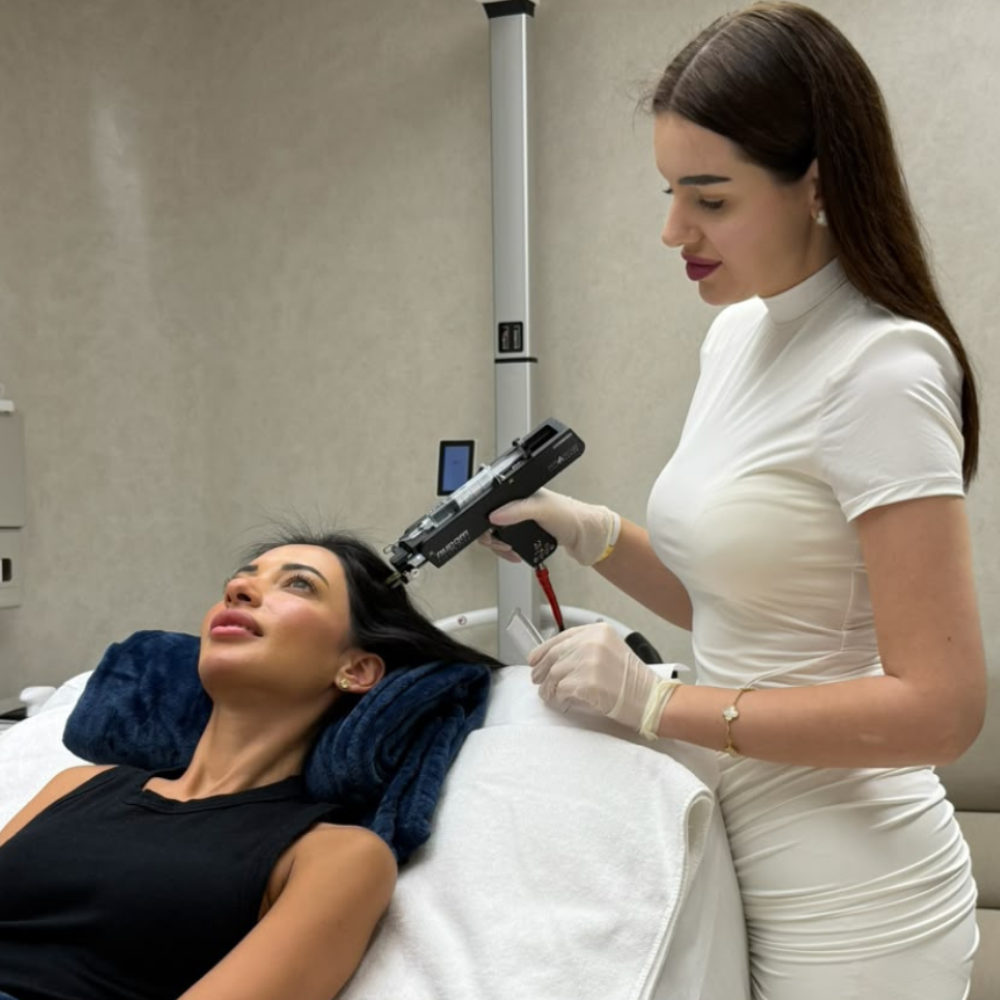
Diagnosis before treatment. The pattern, degree of miniaturisation, medical history and individual goals are considered before a management plan is discussed.
What Are the Early Signs of Pattern Hair Loss?
Androgenetic alopecia can develop gradually, so early changes in density or hair thickness may be easier to notice in photographs, under bright light or during a detailed scalp examination.
Men may notice gradual recession around the temples or frontal hairline.
Reduced density or increasing scalp visibility may become noticeable around the crown or vertex.
Women may notice the central part becoming wider or increased scalp visibility across the top of the head.
The hair may gradually feel less full even before a clearly defined area of loss develops.
Affected areas may contain hairs of noticeably different thicknesses as miniaturisation develops.
The scalp may become increasingly visible under strong light, when hair is wet or when the hair is parted.
Androgenetic Alopecia in
Men & Women
How It May Appear in Men
In men, androgenetic alopecia is commonly referred to as male pattern hair loss. Changes may begin around the temples, frontal hairline, crown or a combination of these areas.
-
✓Temple recession
-
✓Frontal hairline changes
-
✓Crown or vertex thinning
-
✓Progressive reduction in density
How It May Appear in Women
Women may experience androgenetic alopecia as progressive thinning across the central scalp rather than the typical frontal recession seen in many men.
-
✓Widening of the central hair part
-
✓Reduced density across the top of the scalp
-
✓Greater scalp visibility
-
✓Gradually finer hair in affected areas
How Is Androgenetic Alopecia Assessed?
Assessment generally begins with a detailed discussion about when the hair loss started, how it has progressed and whether there is a family history of pattern hair loss.
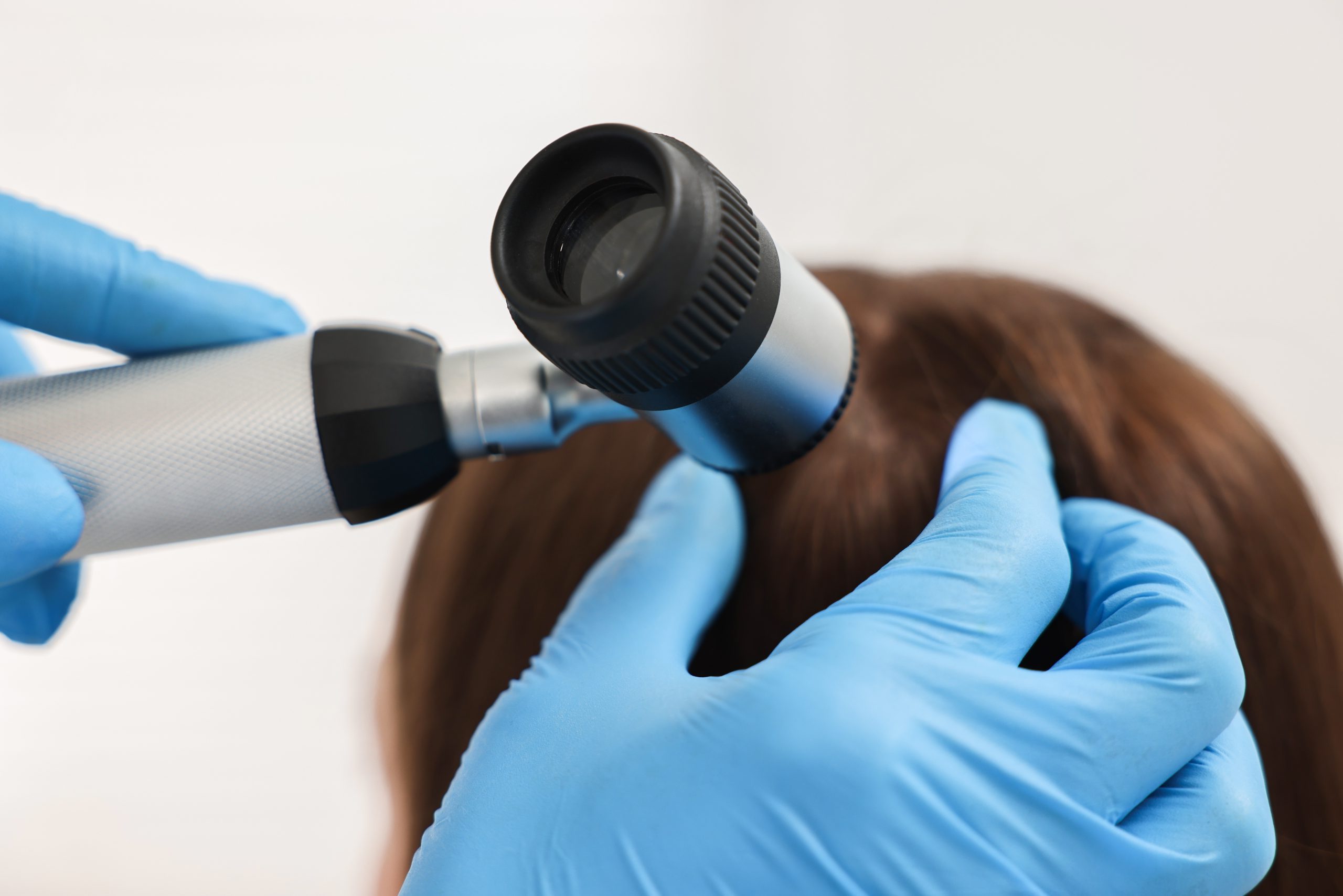
The distribution of thinning and the condition of the hair and scalp are then examined. High-resolution trichoscopy can provide a magnified view of the scalp and hair shafts and may help identify features associated with follicular miniaturisation.
Where the history or findings suggest that another medical or nutritional factor may also be contributing, further investigation or referral to an appropriate healthcare professional may be considered.
-
✓Hair-loss and medical history
-
✓Assessment of hairline, crown and overall density
-
✓High-resolution trichoscopy
-
✓Evaluation of hair-shaft diameter variation
-
✓Assessment of possible follicular miniaturisation
-
✓Referral or additional investigation when appropriate
What Is Hair Follicle
Miniaturisation?
Why Hair Gradually Appears Thinner
Hair follicle miniaturisation is the gradual process in which susceptible follicles begin producing finer and shorter hairs over successive growth cycles.
A scalp can therefore appear less dense even when follicles are still producing hair because individual hairs may no longer have the same diameter or length as before.
Trichoscopy can provide a closer view of differences in hair-shaft diameter and other follicular characteristics that may support assessment of pattern hair loss.
Androgenetic Alopecia vs
Telogen Effluvium
Both conditions can cause noticeable changes in hair density, but they have different patterns and may also occur together.
Androgenetic alopecia usually follows a recognisable distribution, while telogen effluvium commonly causes more diffuse shedding.
Pattern hair loss is generally progressive, while telogen effluvium may follow a physiological or emotional trigger.
Follicular miniaturisation is a characteristic feature considered in androgenetic alopecia assessment.
Androgenetic Alopecia
Management Options
There is no single approach that is appropriate for every person with pattern hair loss. Recommendations depend on the individual's assessment, stage of hair loss, degree of miniaturisation, medical history and treatment goals.
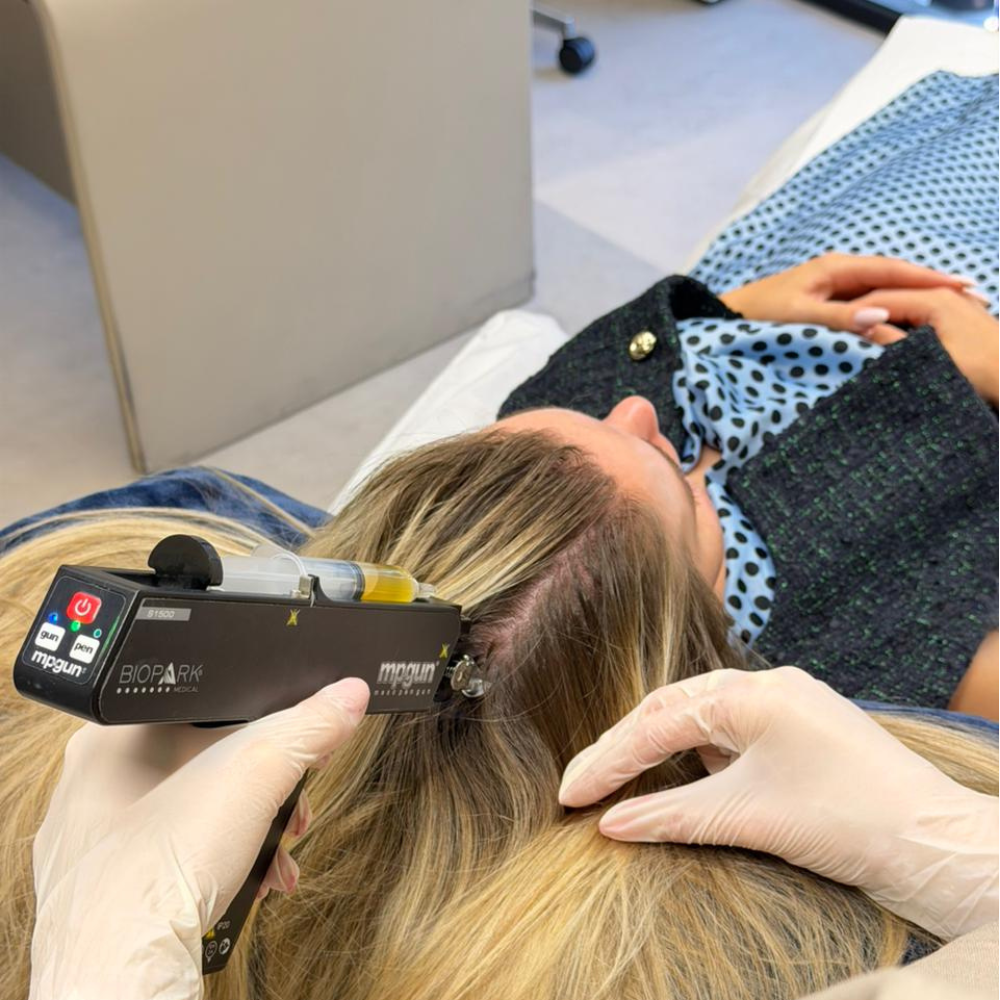
PRP may be considered as part of selected hair-loss management plans following individual assessment. Suitability depends on the person's hair-loss pattern, medical history and treatment goals.
Learn More →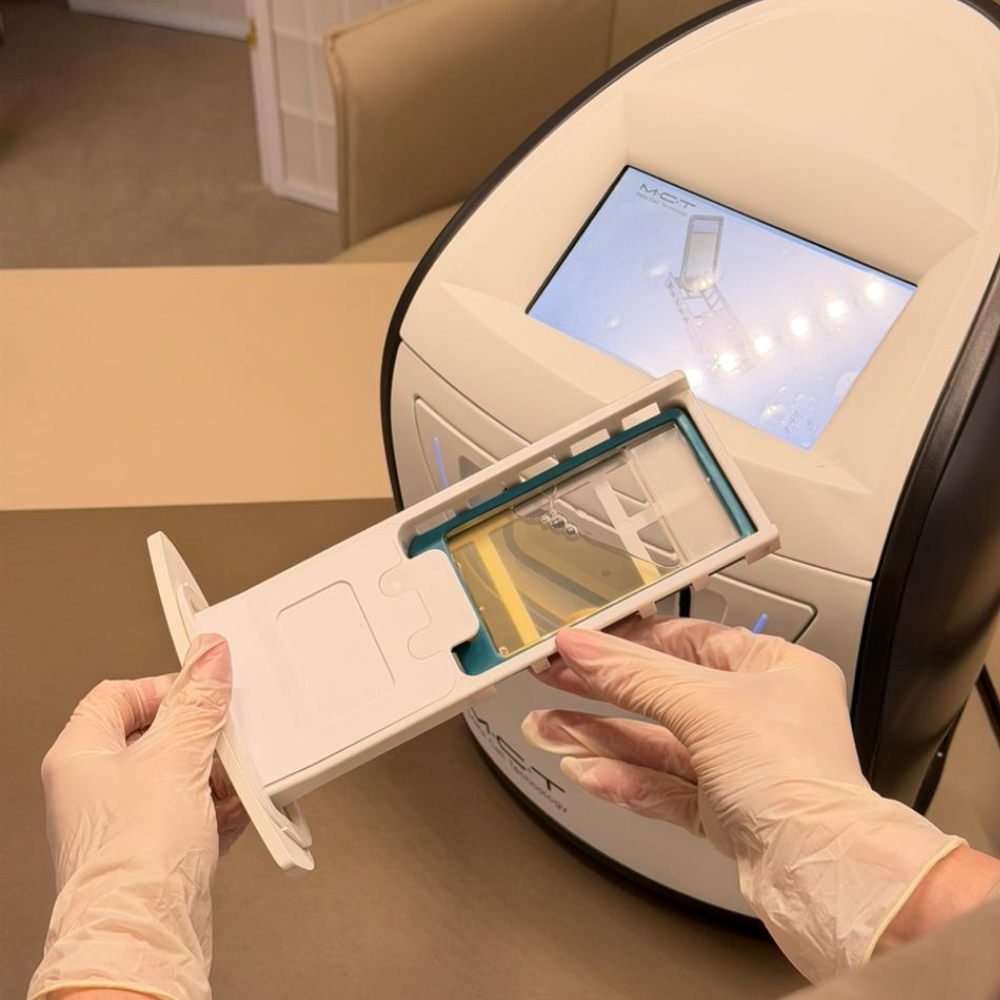
Selected regenerative approaches may be discussed after assessment where appropriate. Individual suitability and treatment planning depend on the clinical presentation.
Learn More →
Peptide-based scalp protocols may form part of selected hair-management plans depending on the findings of the consultation and individual goals.
Learn More →
Low-level laser therapy uses photobiomodulation and may be considered as a non-invasive option within selected hair-management strategies.
Learn More →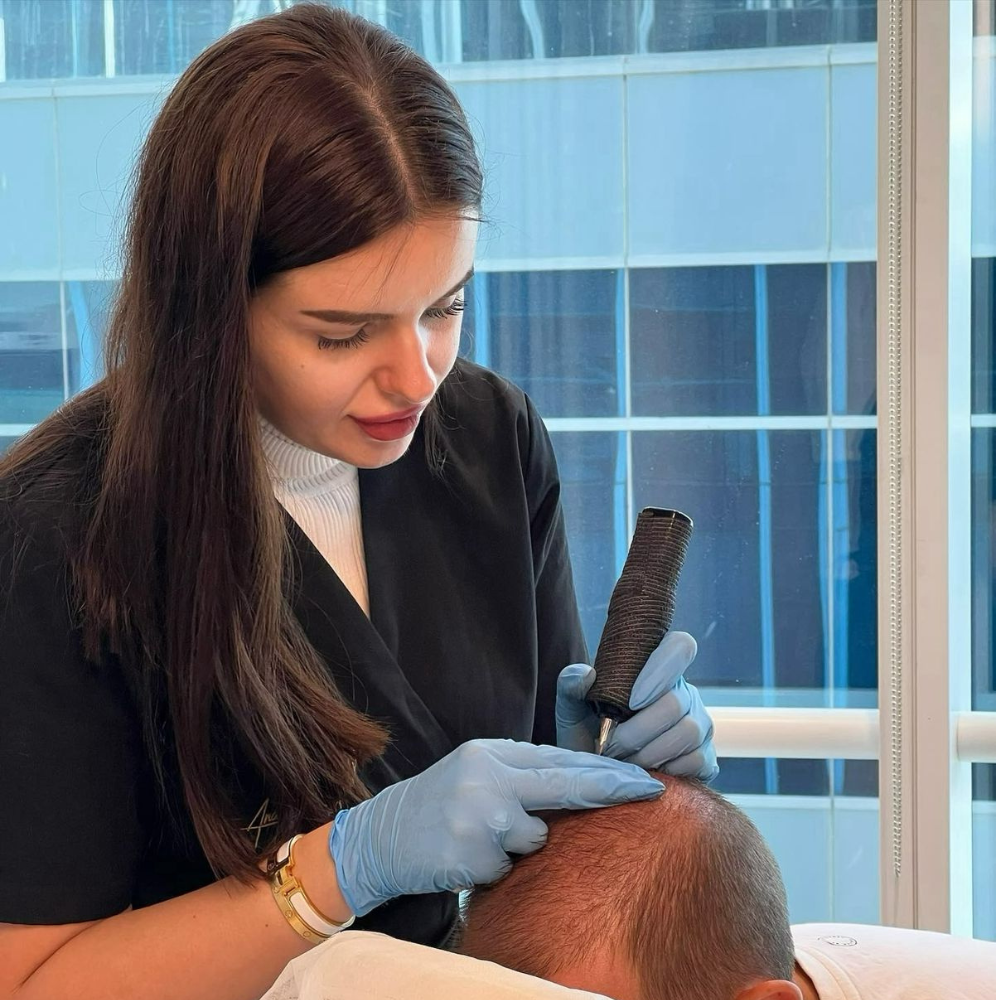
Scalp micropigmentation is a cosmetic option that can create the appearance of greater density or a closely shaved hairline. It does not regrow hair or treat follicular miniaturisation.
Learn More →
A detailed consultation and trichoscopy assessment can help establish the pattern and stage of hair loss before suitable next steps are discussed.
Book Assessment →
What Is the Goal of
Hair-Loss Management?
Androgenetic alopecia varies significantly from person to person. Management goals therefore depend on the individual's stage of hair loss, degree of miniaturisation and personal priorities.
-
✓Understand the pattern and stage of hair loss
-
✓Monitor changes in density and miniaturisation
-
✓Discuss appropriate management options
-
✓Identify when medical assessment or referral may be appropriate
-
✓Establish realistic individual treatment goals
Androgenetic Alopecia FAQs
What is androgenetic alopecia?
Androgenetic alopecia is a form of pattern hair loss associated with genetic susceptibility and biological influences on susceptible hair follicles. It can affect both men and women and may cause gradual changes in hair density and hair-shaft thickness.
Is androgenetic alopecia the same as male pattern baldness?
Male pattern hair loss is the male presentation of androgenetic alopecia. Women can also develop pattern hair loss, although the distribution of thinning is often different.
Can women have androgenetic alopecia?
Yes. Female pattern hair loss is a form of androgenetic alopecia and commonly presents as gradual reduction in density across the central scalp or widening of the hair part.
What is follicular miniaturisation?
Follicular miniaturisation describes the gradual production of finer and shorter hairs by susceptible follicles over successive hair-growth cycles. It is an important feature considered when assessing androgenetic alopecia.
Can trichoscopy help assess androgenetic alopecia?
Trichoscopy provides a magnified view of the scalp and hair shafts and can help assess features such as differences in hair-shaft diameter, density and possible follicular miniaturisation. Findings are interpreted together with the person's history and scalp examination.
Is androgenetic alopecia hereditary?
Genetic susceptibility is an important factor in androgenetic alopecia, although inheritance is complex. Family history can provide useful information but does not by itself determine how or when pattern hair loss will develop.
Can androgenetic alopecia progress over time?
Pattern hair loss can progress over time, although the rate and extent vary considerably between individuals. Some people notice gradual changes over many years while others experience more noticeable progression.
What is the difference between androgenetic alopecia and telogen effluvium?
Androgenetic alopecia typically produces progressive patterned thinning and follicular miniaturisation, while telogen effluvium more commonly causes diffuse shedding. The two conditions can also occur at the same time.
When should I have pattern hair loss assessed?
An assessment may be useful if you notice progressive recession, crown thinning, widening of the hair part, increasing scalp visibility or gradual changes in overall hair density.
Not Sure What Is Causing
Your Hair Loss?
Book a detailed trichology consultation with Andreea Paval in Dubai to assess your hair-loss pattern, examine the scalp with trichoscopy and discuss appropriate next steps based on your individual findings.