

Light That Stimulates Growth
at the Cellular Level.
Therapeutic red light that stimulates follicular metabolism at the cellular level. Painless, non-invasive, and clinically proven as a standalone or combined therapy with over two decades of research supporting its efficacy for hair loss.
The Art of Growth.
The Science of Light.
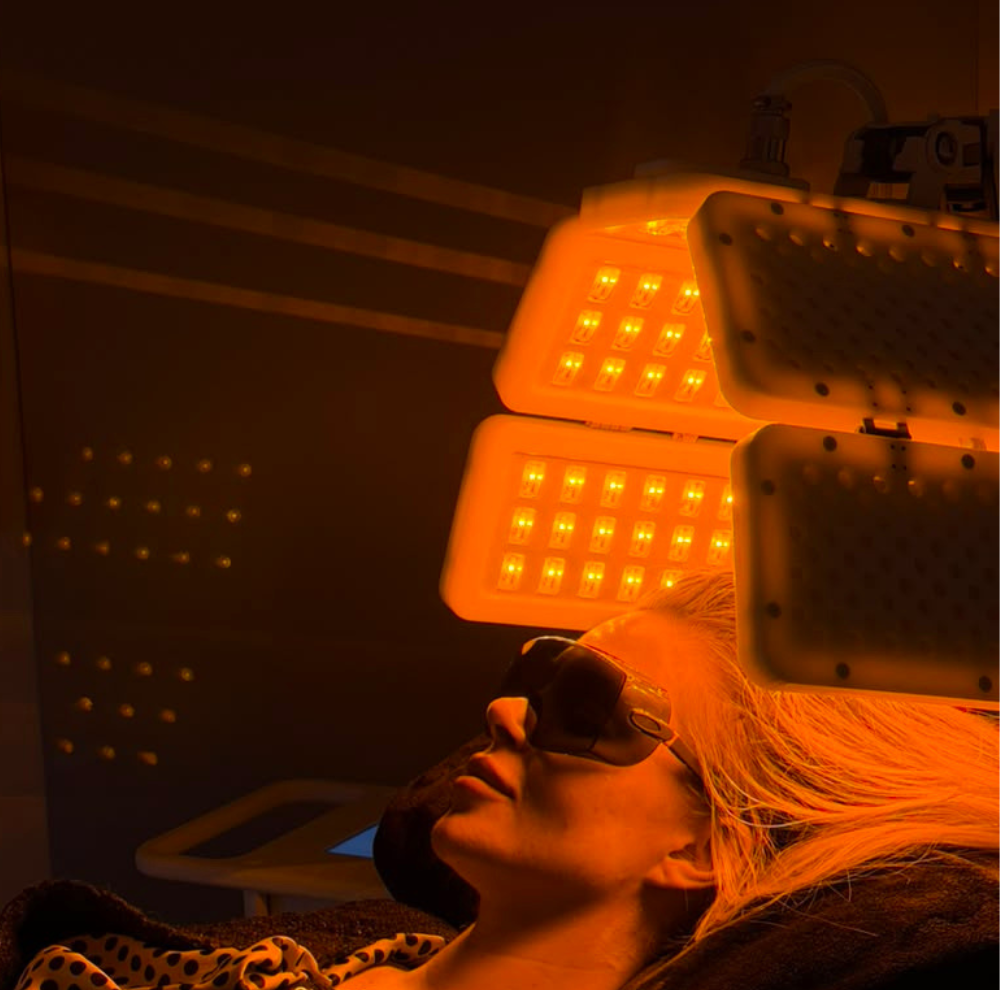
Low-level laser therapy also known as LLLT, photobiomodulation, or cold laser therapy uses specific wavelengths of therapeutic red light to penetrate the scalp and stimulate biological activity within hair follicles. It is completely painless, produces no heat, requires no recovery period, and has accumulated a substantial body of clinical evidence supporting its efficacy for hair loss over more than two decades of research.
When combined with PRP, exosome therapy, or peptide mesotherapy, LLLT has been shown to significantly extend the results of those treatments, maintain the regenerative environment created by biological therapies, and reduce the frequency of maintenance sessions required. It is one of the most clinically versatile tools in our treatment arsenal.
The Science of
Photobiomodulation
The mechanism of LLLT in hair restoration is well-characterised. When light at specific wavelengths most commonly in the 630 to 670 nanometre range is delivered to scalp tissue, it is absorbed by an enzyme called cytochrome c oxidase within the mitochondria of follicular cells. This absorption triggers a cascade of intracellular events that culminate in enhanced cellular energy production, improved follicular metabolism, and accelerated regeneration.
Stimulation of mitochondrial ATP production increasing the energy available to follicular cells for growth and regeneration. Follicles in areas of thinning are often in a state of compromised metabolic activity. By directly increasing cellular energy production, LLLT creates the conditions in which follicles can sustain the biological activity required for active hair growth essentially recharging the cellular machinery of the follicle.
Promotion of the shift from telogen (resting) to anagen (active growth) phase the fundamental mechanism of hair cycle reactivation. One of the primary drivers of progressive hair thinning is the shortening of the anagen phase and the premature entry of follicles into the telogen phase. LLLT directly addresses this by stimulating the molecular signals that govern the hair cycle transition, encouraging follicles to remain in active growth for longer.
Enhancement of scalp microcirculation improving oxygen and nutrient delivery to follicle cells. Adequate blood supply is essential for follicular function. LLLT stimulates local vasodilation and angiogenesis in the treated areas, improving the delivery of oxygen, nutrients, and growth factors to the follicular unit. This creates a more physiologically supportive environment for sustained hair growth and enhances the uptake of biological agents delivered by other treatments.
Reduction of scalp inflammation critical in androgenetic alopecia and other inflammatory hair loss conditions. Chronic low-grade scalp inflammation is a recognised driver of follicular miniaturisation. LLLT has documented anti-inflammatory effects at the tissue level reducing pro-inflammatory cytokines and modulating the immune environment around the follicle. This makes LLLT particularly valuable as an adjunct in androgenetic alopecia, where inflammation accelerates genetic hair loss.
Stimulation of dermal papilla and fibroblast proliferation supporting the full range of cellular activity required for healthy hair growth. The dermal papilla is the primary signalling centre of the hair follicle, governing all aspects of follicular cycling and shaft production. LLLT stimulates dermal papilla cell proliferation and activity, restoring the signalling capacity that diminishes as follicles miniaturise and amplifying the effects of biological treatments that target the same cellular machinery.
Reduction of dihydrotestosterone (DHT) sensitivity at the follicular level potentially modulating one of the key drivers of pattern hair loss. Androgenetic alopecia is driven by the sensitivity of genetically predisposed follicles to DHT. Emerging evidence suggests that LLLT may reduce follicular sensitivity to DHT-mediated miniaturisation signals making it a genuinely therapeutic rather than merely symptomatic intervention in pattern hair loss.
During Your Session &
as Part of Your Plan
LLLT is the most comfortable of all the treatments we offer. There is no injection, no anaesthetic requirement, no blood draw, and no recovery period. During the session, a therapeutic laser device is applied to the scalp, delivering light energy across the treatment area in a systematic pattern. The sensation is described by most clients as gentle warmth or simply the absence of any sensation at all.
- Session duration is typically 20 to 30 minutes — you can read, listen to music, or relax during treatment
- No restrictions on activity before or after sessions no products to avoid, no limitations on washing the hair
- You return to your day immediately and completely no visible signs of treatment whatsoever
- For standalone LLLT protocols: typically twice weekly for the first month, followed by once weekly ongoing
- For clients using LLLT alongside PRP or exosome therapy, the frequency is adjusted based on the overall protocol design
- Post-transplant use: LLLT has been shown to accelerate graft healing and speed the onset of new growth after FUE or FUT procedures
Who Benefits Most
from LLLT
- Early-stage androgenetic alopecia where prior intervention can significantly slow progression and maintain density before loss advances
- Clients who prefer a completely non-invasive treatment option with no needles, blood draw, or downtime whatsoever
- Maintenance therapy for clients who have completed PRP or exosome treatment and want to sustain their results between courses
- Clients with contraindications to injectable treatments who still require an effective hair growth stimulus
- Those with active shedding (telogen effluvium) wanting to accelerate the return to normal growth cycles
- As a regular maintenance component of the Hair Enhancement Programme for clients with healthy hair who want to optimise density and calibre
Painless. Proven.
Powerfully Effective.
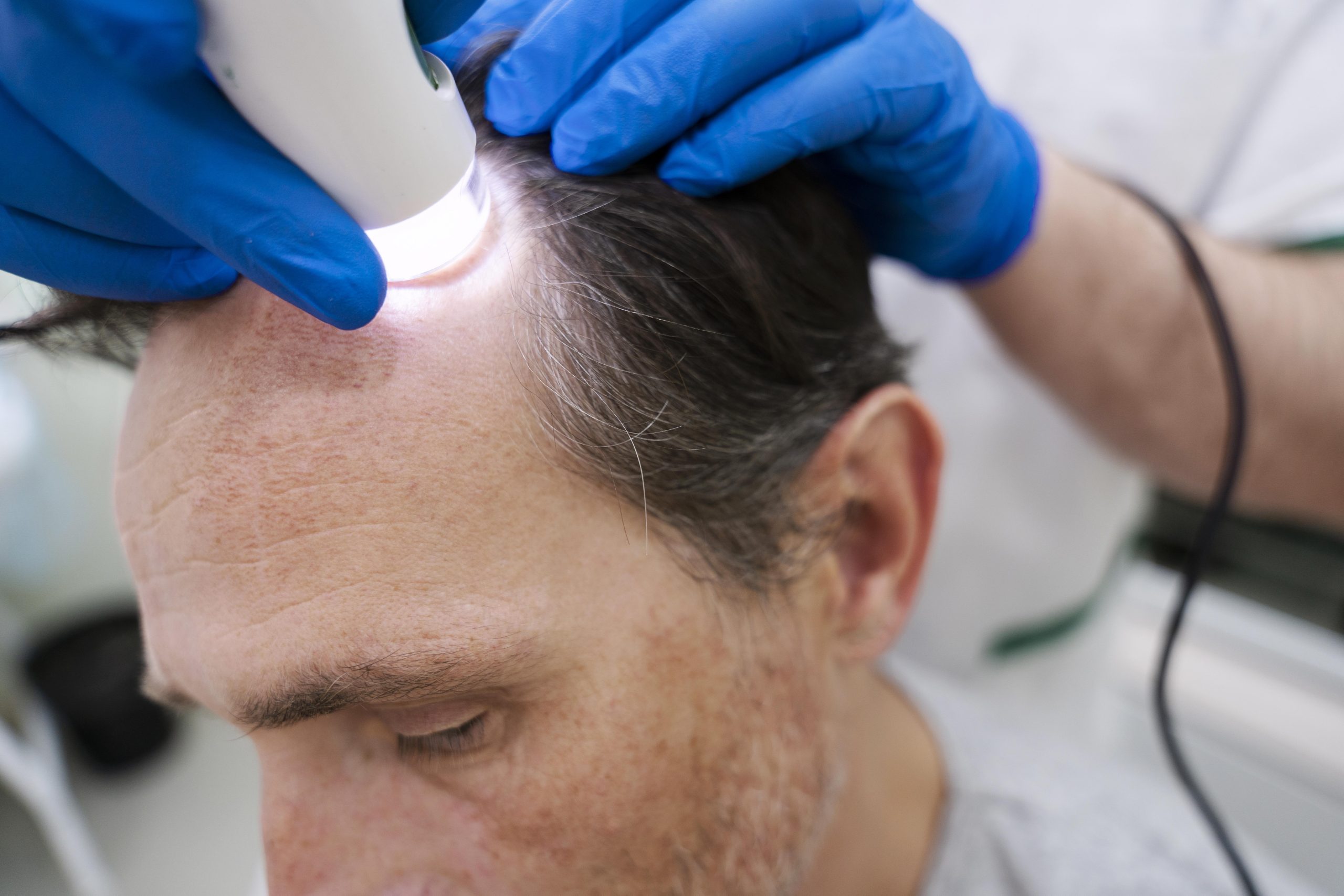
LLLT begins with a trichology consultation to confirm the most appropriate protocol for your condition and goals whether as a standalone treatment or as part of a combined plan alongside PRP or exosome therapy.
at Hortman Clinic
- Duration: 20–30 minutes per session
- Standalone: Twice weekly for 3 months, then weekly
- Downtime: None — resume immediately
- Wavelength: 650–850nm therapeutic red light
- Location: Hortman Clinic, Jumeirah 3, Dubai