


Exosome Hair Treatment.
in Dubai.
The frontier of regenerative hair science. Exosomes are extracellular vesicles involved in cell-to-cell signalling. Emerging research is exploring their potential role in supporting follicular activity and scalp health, but outcomes vary and further high-quality clinical research is needed.
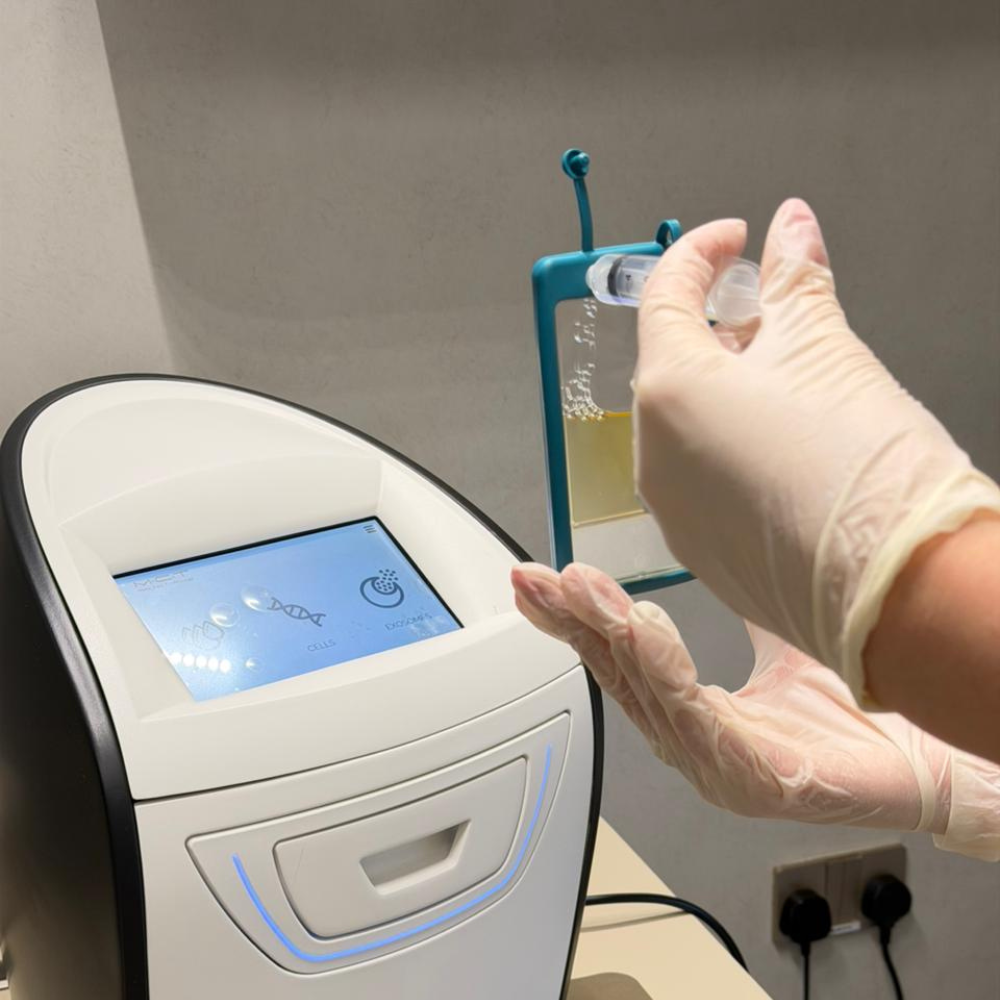
Beyond PRP:
Next-Generation Cell Signalling
Exosome-based treatments are an emerging area of regenerative hair research and may be considered for selected patients following clinical assessment. Exosome treatments use a different biological signalling approach from PRP. However, direct clinical comparisons remain limited, and one treatment cannot be considered universally better for every patient.
Exosome therapy may be considered as an additional treatment option for selected patients, particularly when the diagnosis and previous treatment response support its use.
Understanding Exosomes:
How They Work
Exosomes are nanoscale extracellular vesicles essentially tiny membrane-enclosed packets that are released by cells throughout the body as a means of intercellular communication. Think of them as sophisticated biological parcels, carrying a cargo of molecular signals from one cell to another.
The exosomes used in hair restoration are human-derived exosomes from adipose mesenchymal stem cells (ADSCs), produced under GMP standards by ExoCoBio. When these stem cell-derived exosomes are introduced to the scalp, they deliver their payload directly to the follicular cells and surrounding tissue triggering a cascade of regenerative activity that goes far beyond what conventional growth factor treatments can achieve. Preclinical and emerging clinical research suggests that exosome signalling may influence pathways involved in follicular activity. The extent to which this produces clinically meaningful regrowth in an individual patient remains variable.
Exosomes are being investigated for potential anti-inflammatory signalling effects. They should not replace appropriate medical diagnosis or established treatment for inflammatory scalp disorders.. Chronic low-grade inflammation compromises follicle function over time. Exosomes carry potent anti-inflammatory cytokines that directly address this inflammatory burden, creating a scalp environment far more conducive to sustained hair growth. This makes exosome therapy particularly valuable for clients whose hair loss is driven or accelerated by scalp inflammation.
Extension of the anagen (active growth) phase of the hair cycle resulting in longer, denser, healthier hair. One of the key limitations in hair loss is the progressive shortening of the anagen phase. Laboratory research suggests that exosome-associated signals may interact with pathways involved in the hair-growth cycle. Further clinical research is needed to determine the consistency and duration of this effect in patients.
Exosomes carry proteins, lipids and genetic material involved in cellular communication. Their possible effects on follicular pathways remain an active area of research. This is what separates exosome therapy from all other biological treatments: the ability to alter gene expression within the follicle itself, resetting cellular behaviour at a fundamental level and enabling responses in follicles that have become unresponsive to other regenerative approaches.
Promotion of angiogenesis the growth of new blood vessels to improve scalp microcirculation and follicular nutrition. Follicles in areas of thinning frequently suffer from compromised blood supply, limiting their access to the oxygen and nutrients required for sustained growth. Some laboratory findings suggest exosome-associated signals may support angiogenic pathways. It has not been established that treatment reliably rebuilds the scalp vascular network in every patient.
Tissue repair and anti-fibrotic effects particularly relevant in early-stage scarring alopecia and post-inflammatory conditions. Fibrosis of the follicular unit is a significant driver of permanent hair loss in several alopecia subtypes. Suspected scarring alopecia requires prompt medical assessment because permanent follicular damage may occur. Exosome treatment should not be presented as a proven treatment for scarring alopecia and may only be discussed as an adjunct where clinically appropriate and medically approved.
What Makes This Protocol
About the Product and Treatment Protocol
The ASCEplus Scalp Care HRLV system is the most concentrated, rigorously studied, and clinically validated exosome formulation available for hair restoration globally. Every element of the formula is evidence-selected.
-
10 Billion Exosomes per Treatment: The manufacturer reports a specified exosome concentration per treatment. The presence of a particular concentration does not guarantee a measurable clinical response.
-
10 Hair-Specific Growth Factors: Including VEGF, KGF, HGF, PDGF, and others identified specifically for their role in follicular biology and regeneration
-
30 Bioactive Nutrients: A comprehensive follicular support matrix including vitamins, minerals, and amino acids that enhance the exosome effect at the cellular level
-
Biotin & Copper Tripeptide: Included within the manufacturer’s formulation. Suitability and expected benefit should be assessed individually.
-
ExoCoBio GMP Manufacturing: GMP-certified production with rigorous quality control ensuring consistency and safety across every vial used in clinical practice
What to Expect
and When
Timelines vary. Some patients may notice changes in shedding or hair quality within several months, but direct evidence showing consistently faster results than PRP is limited.. This is attributed to the higher biological potency of the exosome signal and its more direct mechanism of cellular action.
-
During the first few months, some patients may notice changes in shedding. Others may not experience an early visible change.
-
Early changes, where they occur, may begin to become noticeable after several months. Hair-growth cycles are slow, and assessment should be based on standardised photography and follow-up trichoscopy.
-
At approximately four to six months, progress may be reviewed using photographs and trichoscopy. The degree of density improvement varies, and some patients may experience limited or no visible change.
-
Months 6–12: Full assessment of treatment outcomes maintenance protocol determined based on individual response
The Most Advanced Treatment.
The Most Impressive Results.
Exosome therapy begins with a trichology consultation to confirm it is the right treatment for your specific condition and stage of hair loss. Andreea will assess whether exosome therapy alone or in combination with PRP will produce the best outcome for you.
at Hortman Clinic
- Duration: 45–60 minutes per session
- Protocol: 3–6 sessions, 3–4 weeks apart
- Downtime: Minimal resume same day
- Maintenance: Every 6–12 months after initial course
- Location: Hortman Clinic, Jumeirah 3, Dubai